

Donor Screening Process
Evaluation
The Food and Drug Administration (FDA) and other regulatory entities require a multi-step process to determine if an individual is eligible to become a sperm donor and to continue donating. The first step involves reviewing the donor’s personal and family medical history. The second step involves laboratory testing for relevant infectious diseases. The third step involves a brief, targeted physical examination that focuses on clinical findings of and risk factors for infectious diseases. After the initial evaluation, these steps are repeated at least once every 6 months to ensure that the donor remains eligible to continue donating.
In addition to FDA-required screening, Xytex performs advanced genetic testing on all donors, including hemoglobin analysis, carrier testing for hundreds of inherited conditions, and chromosome analysis (karyotyping), and hereditary cancer genetic testing for new donor candidates.
Donor profiles identify the genetic testing performed for each donor. Xytex recommends reviewing the actual test reports available for download from donor profiles for detailed information.
Screening
The process of becoming a sperm donor begins with in-depth screening. The health and medical history of our donors are of utmost importance. While each donor is different, they all go through the same thorough screening process.*
- Candidates complete a medical history questionnaire (MHQ), including detailed questions about personal health and family medical history.
- A semen sample is collected for analysis to assess sperm count, volume, motility, and other factors that determine suitability for donation.
- A Donor Coordinator conducts an in-depth interview covering personal and family medical history, along with a background check and education verification.
- A psychological assessment is completed, including behavioral, psychosocial, and risk evaluations conducted by a clinical social worker and licensed clinical psychologist.
- A brief, targeted physical exam is performed.
Donor privacy is very important to us. Donor and client agreements address the respective rights and obligations associated with the use of donor sperm. Xytex donors entering the program are identity-disclosed. A donor-conceived person who meets Xytex’s eligibility requirements may request specified identifying information about the donor after reaching age 18, in accordance with Xytex policies and applicable requirements.
Questions developed by the FDA and U.S. Centers for Disease Control and Prevention (CDC) are included. Any affirmative answer to a required question disqualifies the candidate. All questionnaires are reviewed by and must be approved by our Medical Director for a candidate to continue through our screening process. FDA-mandated screening and testing also ensures our donors are in continued good health.
Please note that medical history provided by the donor is not validated by reviewing the donor’s or his family’s personal medical records.
Lab Testing
As part of our commitment to quality and safety, Xytex conducts laboratory testing and physical exams on all donors to assess overall health and ensure compliance with industry standards.
- Blood typing
- Human immunodeficiency virus (HIV), types 1/2/O via antibody testing
- HIV via nucleic acid testing (NAT)
- HIV p24 antigen (Ag)
- Hepatitis B virus (HBV) via core antibody (HBcAb) testing
- HBV via surface Ag (HBsAg) testing
- HBV via NAT
- Hepatitis C virus (HCV) via antibody testing
- HCV via NAT
- Human T-lymphotropic virus (HTLV), types 1/2 via antibody testing
- West Nile virus (WNV) via NAT
- Syphilis via treponemal-specific antibody testing
- Chlamydia via urine NAT
- Gonorrhea via urine NAT
- Cytomegalovirus* (CMV) via total antibody testing with reflex to IgG and IgM antibody testing for a positive result
We test all donors for Cytomegalovirus (CMV), a common virus that most adults have been exposed to at some point in their lives. After the initial infection, CMV remains dormant in the body.
Donors with an IgG positive result, which indicates a non-active CMV infection, may still be accepted into the program. Donors with an IgM positive result, indicating an active infection, are not accepted.
If you have questions about a donor’s CMV status, we recommend discussing it with your physician before purchasing vials. Each donor profile includes an icon indicating CMV status. A positive or negative CMV result does not automatically qualify or disqualify a donor.
Genetic Testing
Comprehensive genetic testing is standard at Xytex. All donors joining our program undergo expanded carrier testing for hundreds of inherited conditions. Beginning January 2026, hereditary cancer genetic testing also became part of the screening process for all new donor candidates. Each donor profile includes information about the genetic testing performed for that donor.
If there is a change in a donor’s genetic status, the donor profile is updated accordingly.
Hereditary cancer genetic testing at Xytex
Additional Resources
Help, My Sperm Donor Is A Carrier Of A Genetic Disease
Video by Jamie K. Dokson, ScM, LCGC(Licensed Certified Genetic Counselor)
xyGene Donors
Each xyGene donor undergoes expanded carrier testing of over 100 genetic conditions. *
- 21-Hydroxylase-Deficient Congenital Adrenal Hyperplasia
- (CYP21A2)
- Alpha-1 Antitrypsin Deficiency (SERPINA1)
- Alpha-Thalassemia (HBA1/HBA2)
- Beta-Thalassemia (HBB)
- Familial Mediterranean Fever (MEFV)
- Galactosemia (GALT)
- Krabbe Disease (GALC)
- MCAD Deficiency (ACADM)
- Phenylalanine Hydroxylase Deficiency (PAH)
- Polycystic Kidney Disease, Autosomal Recessive (PKHD1)
- Pompe Disease (GAA)
- Smith-Lemli-Opitz Syndrome (DHCR7)
- Very Long Chain Acyl-CoA Dehydrogenase Deficiency (ACADVL)
- Wilson Disease (ATP7B)
- Zellweger Spectrum Disorder, PEX1-Related (PEX1)
* Donors entering the program after January, 2019 have been screened for more than 280 carrier conditions: Sema4
Negative genetic testing only reduces the possibility that a donor is a carrier of a particular condition.
Genetic testing changes over time and some donors may have been tested for fewer conditions. Donors who joined our program prior to 2012 may not have been tested for all conditions listed above.
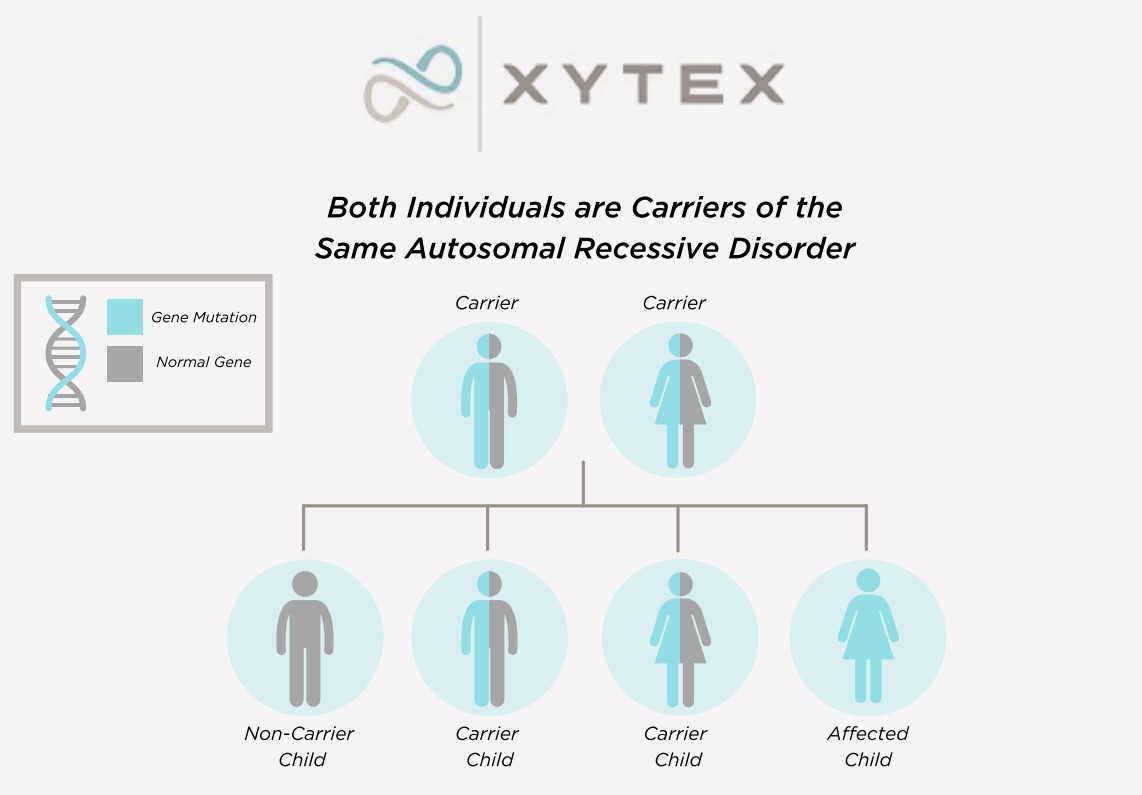
While we do accept donors who are found to be carriers of genetic conditions, to purchase sperm of a donor known to carry a genetic condition, a client must provide proof that she does not carry the condition and has received genetic counseling. If a female is a known carrier of a specific genetic condition, we will provide a copy of the donor’s test reports to the physician and genetic counselor